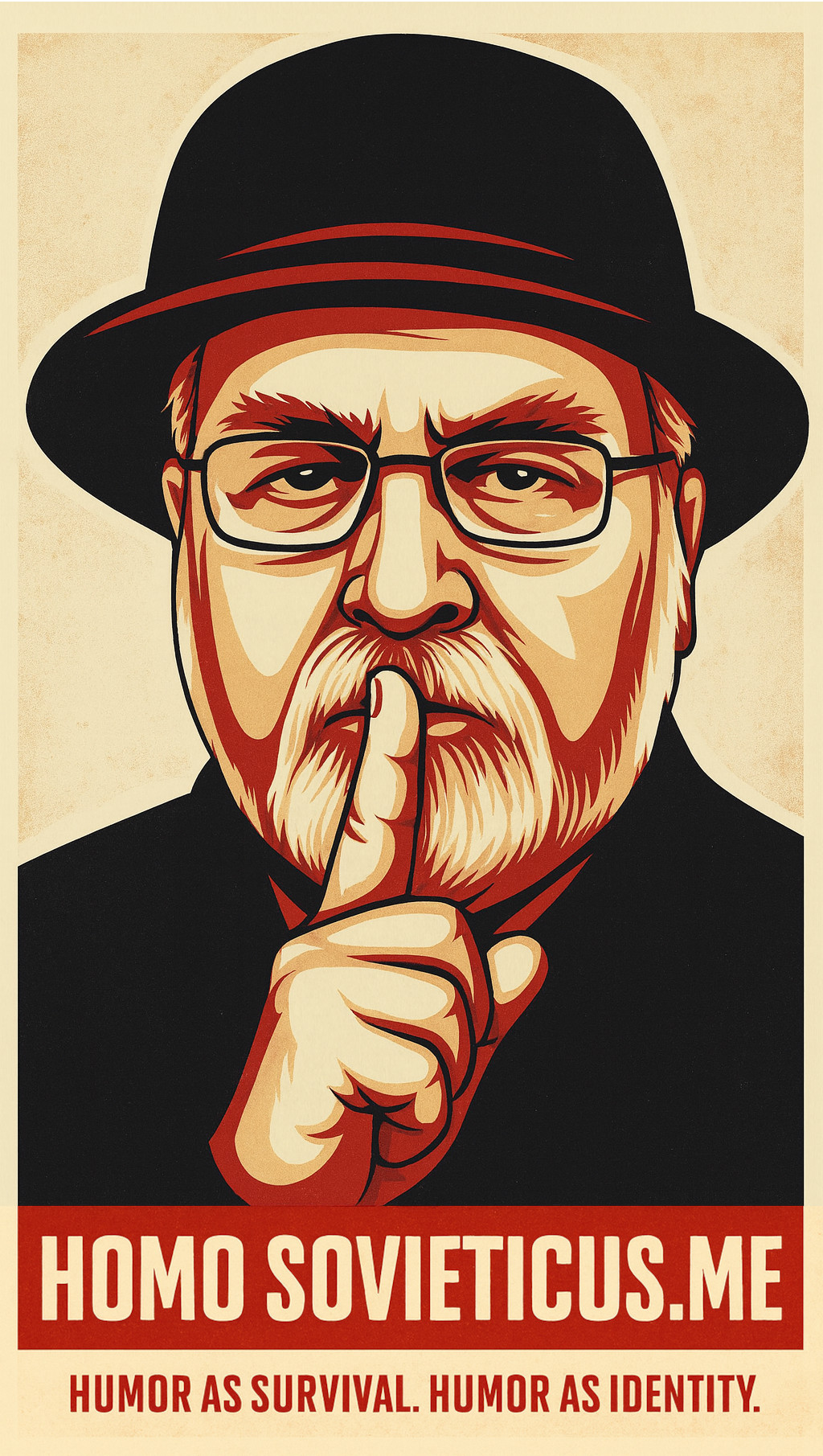
Homo Sovieticus
HomoSoveticus.me is a cultural bridge.
We translate and explain Soviet and post‑Soviet anecdotes for an English‑speaking audience, showing how humor was not just entertainment but a survival tool, a form of resistance, and a mirror of everyday absurdity.
Not just jokes: Anecdotes are miniature comedies with a twist, reflecting the contradictions of life under socialism.
Humor as survival: In a world of censorship, shortages, and bureaucracy, laughter was freedom.
Cross‑cultural insight: By comparing Soviet anecdotes with British satire, American sitcoms, and French comedy, we reveal both universal mechanisms of humor and unique cultural codes.
Educational purpose: Each anecdote comes with context—why it was funny then and what it tells us today.
Our mission: to preserve the wit of Homo Sovieticus and share it with the world, not as nostalgia, but as living testimony to the power of humor in difficult times.
Homo Sovieticus (Latinized term meaning ‘Soviet Man’) is an anti-communist pejorative term coined to describe the average conformist individual in the Soviet Union and other Eastern Bloc countries. Popularized by Soviet writer Aleksandr Zinovyev, it gained negative connotations and represented the perceived outcome of Soviet policies. See Wikipedia’s article on Homo Sovieticus for more.
See BBC’s obituary of Zinovyev (May 10, 2006)
Heller (Geller) Mikhail Cogs in the Wheel: The Formation of Soviet Man. — Alfred A. Knopf, 1988. — P. 27, 43, 47. — ISBN 978-0394569260.
See The Economist’s reflection on the legacy of Homo Sovieticus (Dec 10, 2011).